
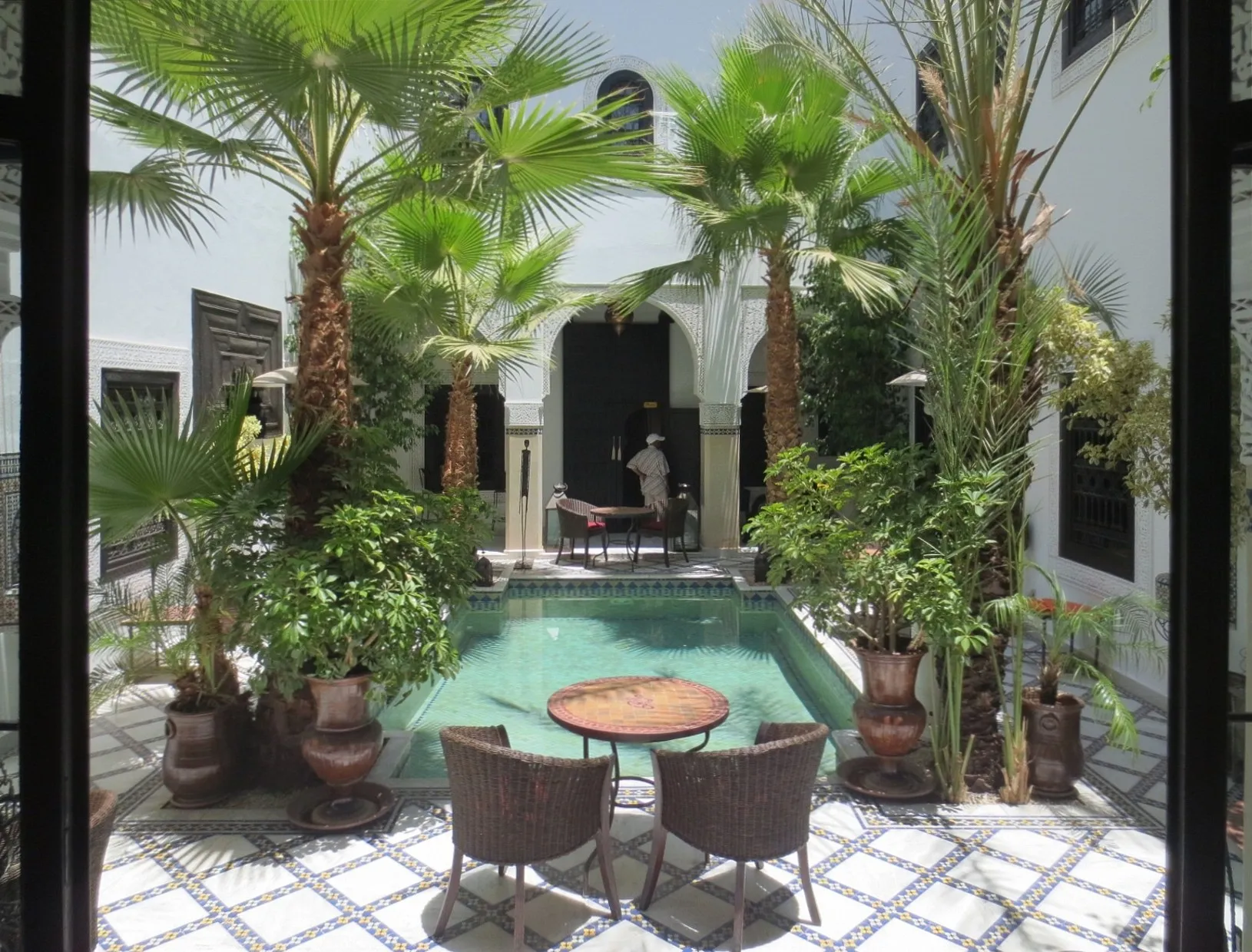
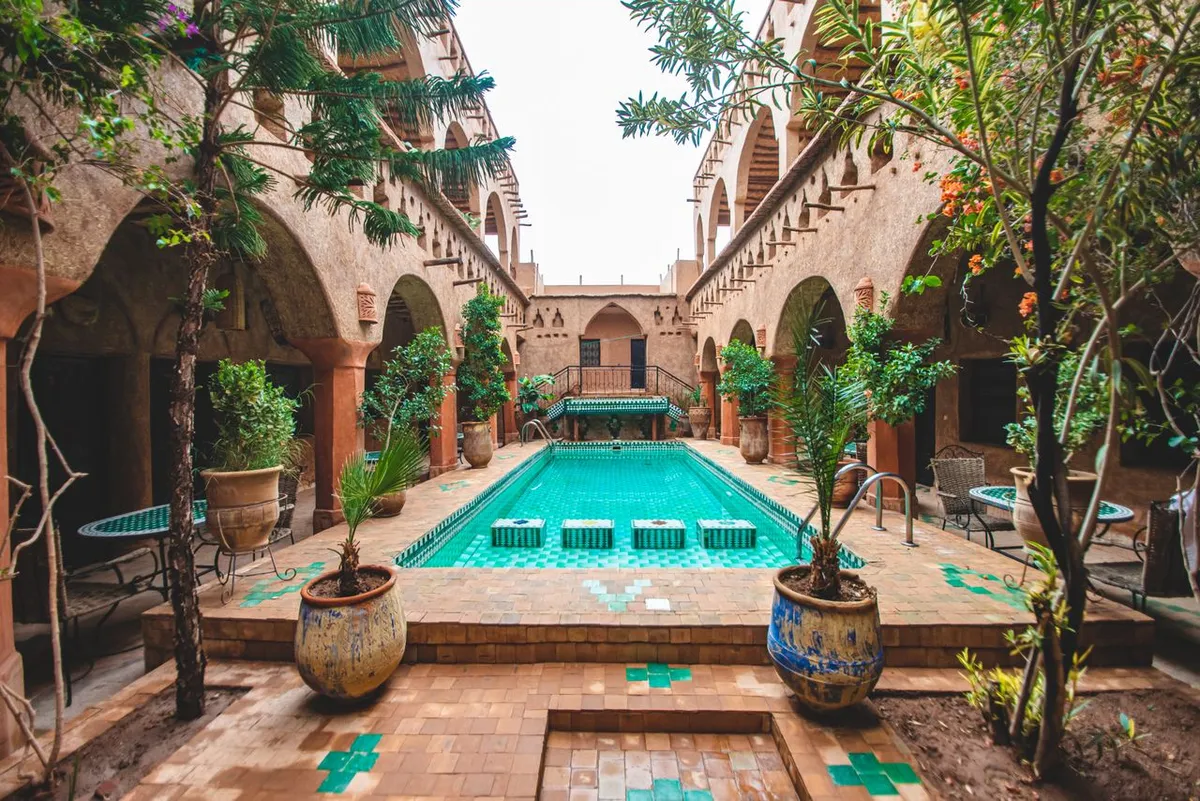
The riad, a traditional house built around a courtyard, is often what travellers remember most from Marrakech or Fes. But most riads have around ten rooms, rarely more than twenty. For a group, the question is not only which riad to choose, but how many you need and how to organise them.
How many people can a riad take?
In practice, a boutique riad usually sleeps between ten and thirty people, depending on the number of rooms and how they are set up: doubles, twins, family suites. Some large riads that have become hotels go further, but they sometimes lose the intimacy the group came for.
Should you privatise the riad?
For a group that fills most of the rooms, privatising is often the simplest answer. The courtyard, the roof terrace and the kitchen become the group's own, and the house runs on the group's schedule. It is usually booked several months ahead, especially for the busiest dates.
What if the group is too big for one riad?
The classic solution is to split the group across several nearby riads in the same part of the medina. You then need to keep the houses balanced (the same level of comfort), check the walking distance between them, and plan one shared place for meals and meetings.
Which practical constraints should you plan for?
- Access: many riads sit in lanes that vehicles cannot enter. Luggage covers the last few metres on foot or by handcart.
- Stairs: few riads have a lift, something to flag for travellers with reduced mobility.
- Noise: the open courtyard carries sound, which matters for a group that comes back late.
- Meals: not every riad can serve a seated dinner for the whole group.
A group in a riad means a whole house to itself: everything gets simpler when the size of the group and the size of the house match.