
Retired travellers fill a large share of group departures to Morocco, often several times over the years. They travel outside school holidays, read the programme closely and come back when the trip has been well judged. What they ask for is rarely luxury. It is a programme that respects their energy, from the first transfer to the last dinner.
How many hours on the road per day?
Four hours of driving is a comfortable maximum, with a stop every ninety minutes or so for a coffee, a viewpoint or simply a walk. Longer legs are possible on a circuit such as Fes to the dunes, but they should be split by a night halfway, in Midelt or Erfoud for instance. Plan two nights in most hotels, so that luggage is unpacked only every other day, and start the days at nine rather than seven. The coach itself matters: comfortable seats, a working microphone and enough space for everyone to sit where they like.
Which hotels and rooms make the difference?
Hotels with lifts, rooms close to the restaurant and bathrooms with showers at floor level rather than high bathtubs. In a riad, ask for the ground floor rooms for the participants who need them, because stairs are steep and often the only way up, as described in Riads for groups. Dinner at seven rather than nine, lighter menus on request and a quiet dining room are details that senior groups notice and mention.
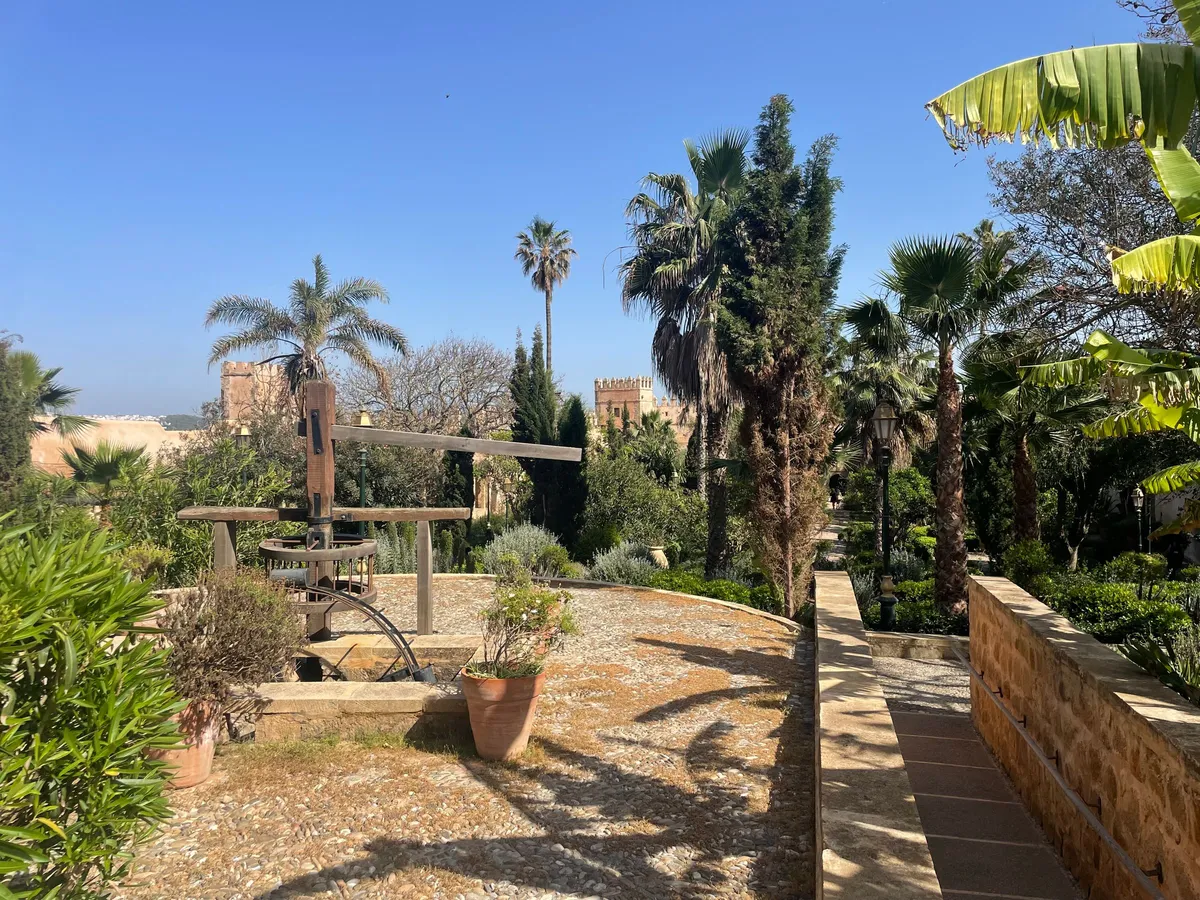
Medinas, stairs and dunes: what needs adapting?
In the medinas, the ground is uneven and the alleys climb. Shorter visits with a seated break in a garden or a café work better than a long walk, and porters with handcarts take care of luggage between the coach and the riad. In the desert, a hotel near the dunes or a camp with private bathrooms in each tent replaces the more basic camps, and the camel ride stays optional, with a 4x4 ride to the top of a dune for those who prefer. Guides should speak clearly and slowly, with headsets in the noisy places.
Older travellers rarely complain about seeing too little. They complain about rushing.
When do senior groups travel best?
Spring and autumn suit every region, and winter is a real opportunity: Marrakech is bright and mild in the daytime, and Agadir enjoys a gentle climate that many European retirees choose for long winter stays, as explained in Agadir and the Souss. Summer in the south is best avoided. A DMC in Morocco can build the whole programme around these limits, and our transport page explains the choice of vehicles.