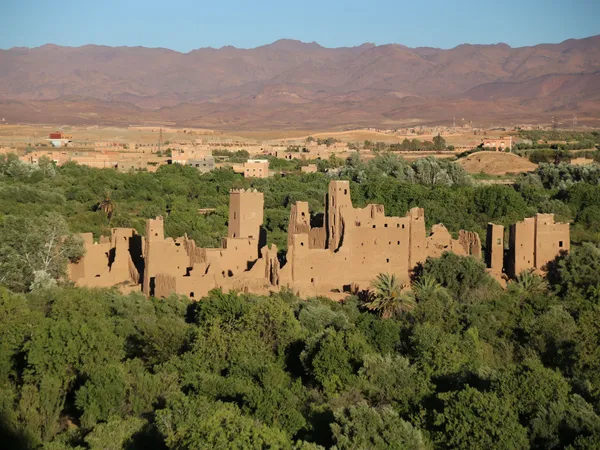

Between Ouarzazate and the dunes, the road of the kasbahs passes the mouths of two gorges about an hour apart. Most circuits glance at them through the coach window on the longest day of the trip. Given one night and a few hours, they become one of its strongest moments.
Dades or Todra: what is the difference?
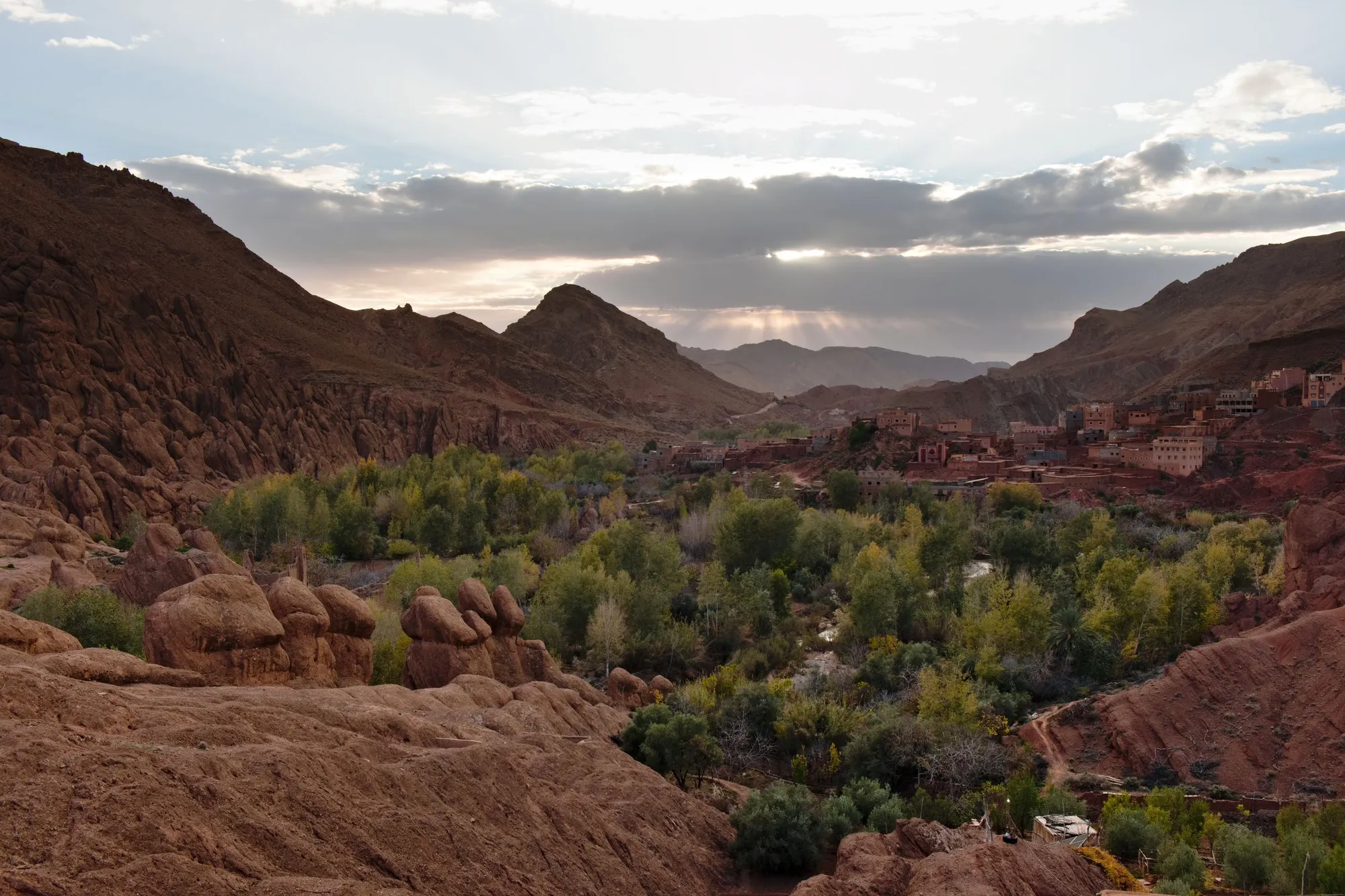
They are two very different landscapes. The Dades opens north of Boumalne into a long valley of earthen villages, poplars and walnut trees, with red rock eroded into strange rounded shapes and a road that climbs the cliff in tight bends. The Todra, fifteen kilometres from Tinghir, is a canyon: a river runs between walls about three hundred metres high, and at its narrowest point the gorge is barely ten metres wide. The Dades is a drive with views; the Todra is a walk between stone.
How long does the Todra gorge take?
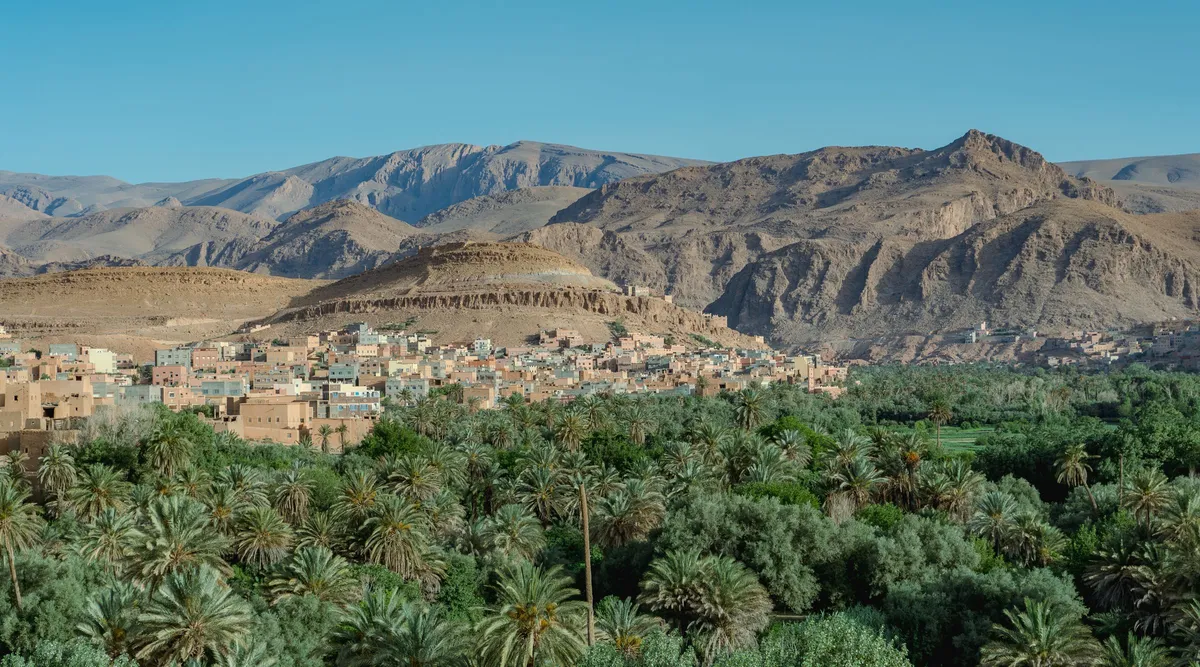
About an hour and a half on site. The coach stops at the entrance, and the group walks along the river through the narrowest section, flat and easy, before returning. Late morning is the best moment, when the sun reaches the bottom of the canyon and lights the walls. On the way, the palm grove of Tinghir, seen from the road above the town, shows how a whole oasis lives from one river.
Which walks suit a group in the Dades?
Two formats work well. A short walk among the rock formations near the road, an hour with a local guide, suits every level and offers the classic photos of the valley. A longer walk of two or three hours follows the paths between the villages and the fields, where the group meets the families who still farm the valley floor. Check with the transport team how far the coach can go, because the road narrows as it climbs, and smaller vehicles may be needed for the upper part. Both visits combine easily with the rose valley just before, described in Spring in Morocco with a group.
In the Todra, the sky is a blue ribbon three hundred metres above the river.
Where does the group spend the night?
In the Dades, small hotels line the river in the gorge itself, ideal for groups of twenty to thirty who want to wake up between the cliffs. Larger groups sleep in Boumalne or Tinghir, where hotels are bigger and coaches park easily. A night here splits the long road from Ouarzazate to the dunes in two, so the group arrives at the camp rested, as described in Taking a group into the Sahara. A DMC in Morocco can place that night where it best serves the rest of the route.