
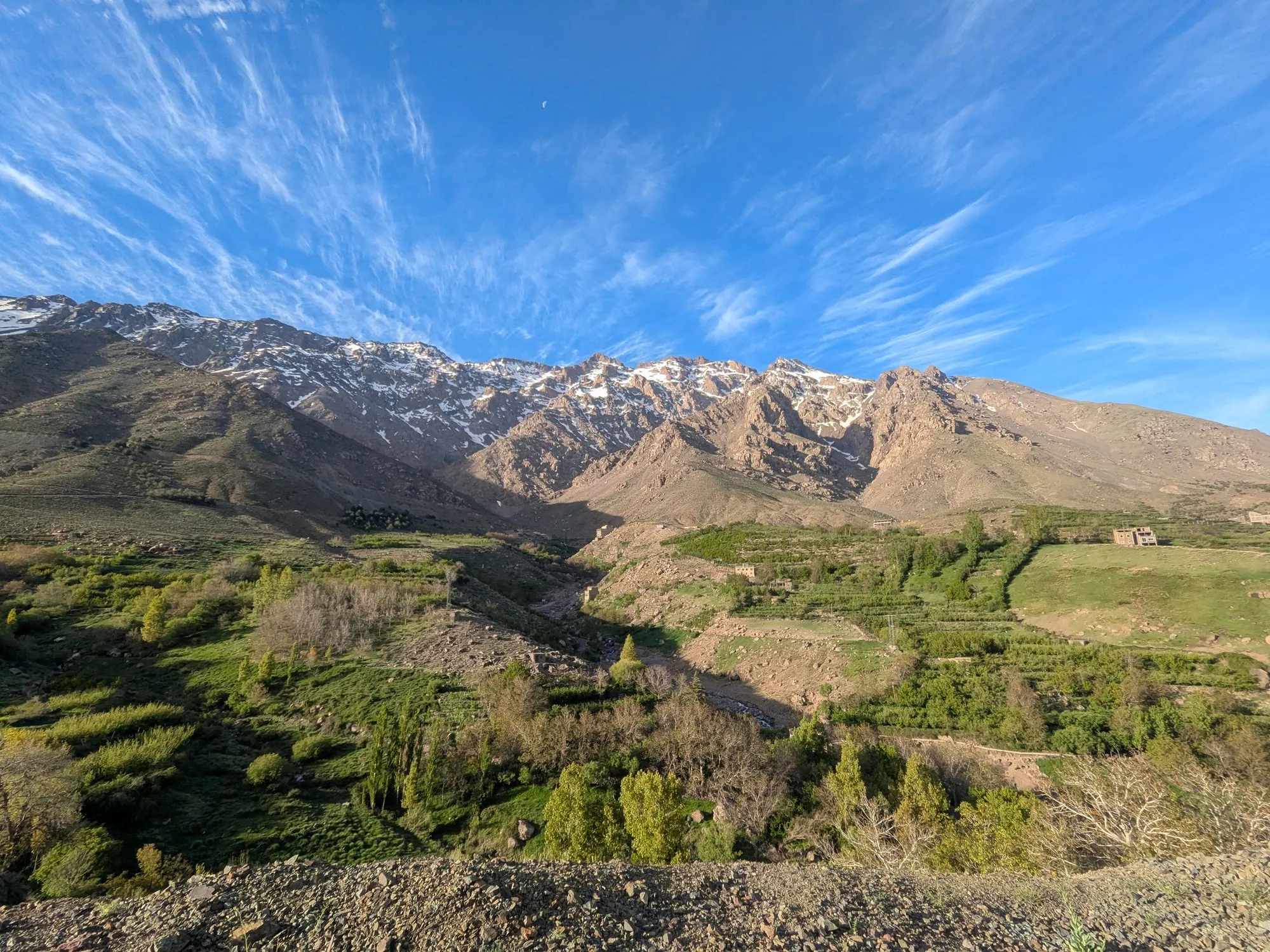
At 4,167 metres, Jebel Toubkal is the highest summit in North Africa, and one of the few peaks of that height that a group without climbing experience can reach on foot. The path is not technical in summer. What makes the difference is the time given to the body to adjust, and that is decided when the programme is written, long before the first step.
Two, three or four days: which length suits the group?
Two days is the express version: a long climb from Imlil to the refuge, then the summit at dawn and the whole descent the same day. It suits trained walkers and leaves no margin. Three days is the format most groups should choose, with a first night in a village of the valley, which softens the climb and the altitude. Four days adds a loop through the villages and passes around Imlil, such as Tacheddirt, before the ascent: the group arrives at the refuge already acclimatised, and the summit becomes a pleasure rather than a test. The village of Imlil and the drive from Marrakech are described in A day in the High Atlas with a group.
What does the climb to the refuge look like?
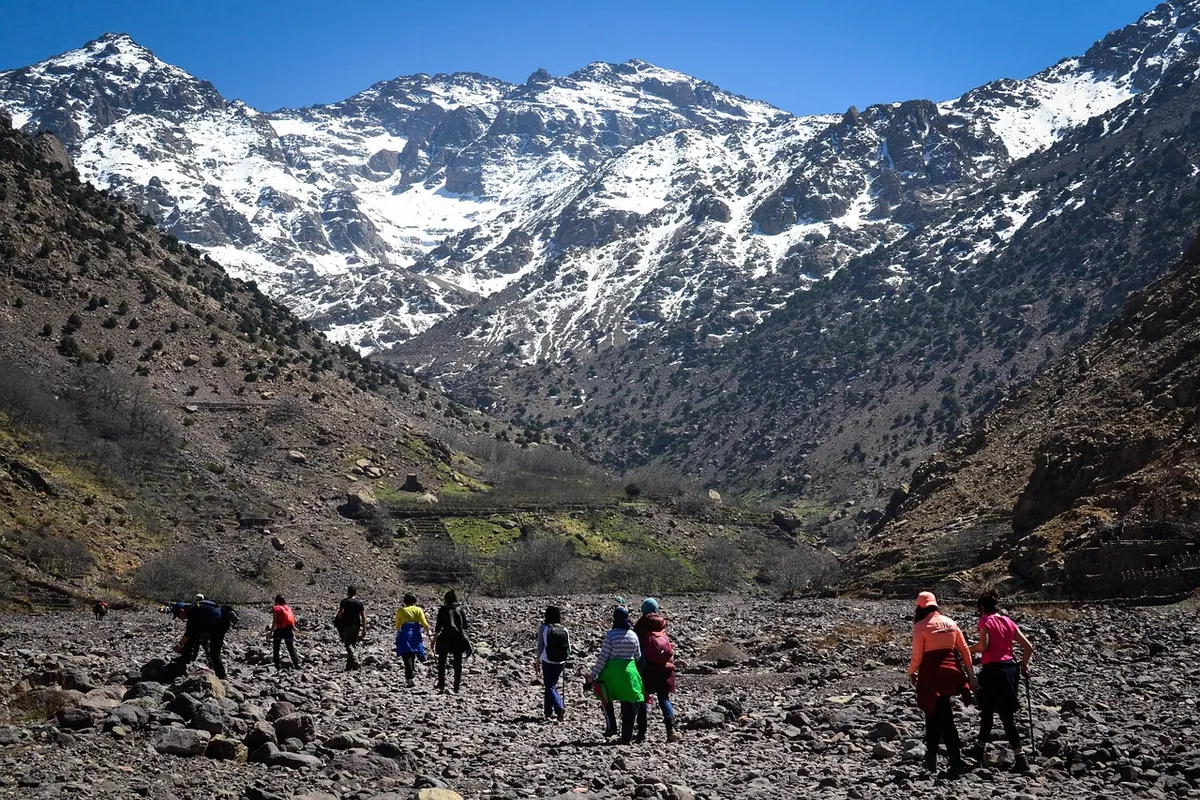
From Imlil, at about 1,740 metres, the path follows the valley past the shrine of Sidi Chamharouch, then climbs steadily to the refuges at about 3,200 metres: five to six hours of walking. Mules carry the luggage up to the refuges, never beyond. The refuges offer dormitories and simple meals, and their beds are limited: in spring and autumn, a large group should book early and may be split between two buildings.
Who leads the group on the mountain?
Since 2019, walkers heading for the summit must be accompanied by a licensed mountain guide. This is a separate qualification from the city guides presented in Licensed guides in Morocco, with its own training in mountain safety. For a group, the right ratio is one guide for a small team, with assistants when the group grows, so that a slower walker never holds back the others or walks alone.
On Toubkal, the summit is decided the day before: by the pace kept on the way to the refuge.
What changes in winter?
From December to March, and often into April, snow covers the upper slopes. The ascent then requires crampons, an ice axe and some experience of walking on snow, and the days are shorter and colder. It remains a superb outing for prepared groups, but it is a winter mountaineering trip, not a summer walk. For a mixed group, late spring and early autumn are the safest choices. The other mountain options of the cold season appear in Winter in Morocco with a group. A DMC in Morocco can build the trek into a longer circuit, with a rest night in Marrakech on the way down.