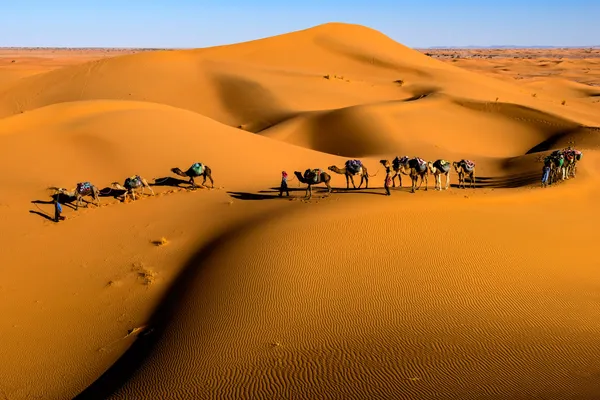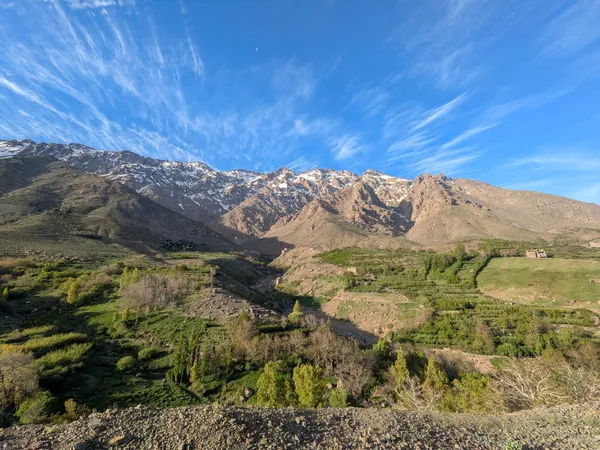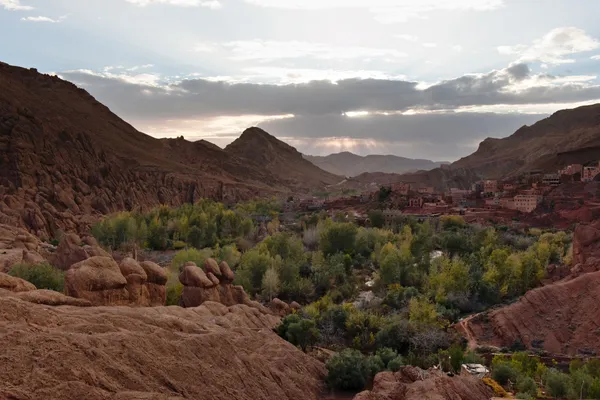

On most circuits, Ouarzazate is the town where the coach stops for the night after crossing the Atlas and before the long road to the dunes. That is a pity. The ksar of Ait Benhaddou, the kasbahs and the oases around the town deserve a proper stage, and they reward agencies that build one into the programme.
What does Ouarzazate offer beyond a night stop?
The town grew up around the Taourirt kasbah, a former residence of the Glaoui family whose courtyards and painted ceilings can be visited in an hour. Ouarzazate is also the capital of Moroccan cinema: two studios on the edge of town have hosted international productions for decades and open their sets to visitors. And the large hotels along the main avenues take coach groups easily, which the small villages of the south rarely can.
Morning or late afternoon at Ait Benhaddou?
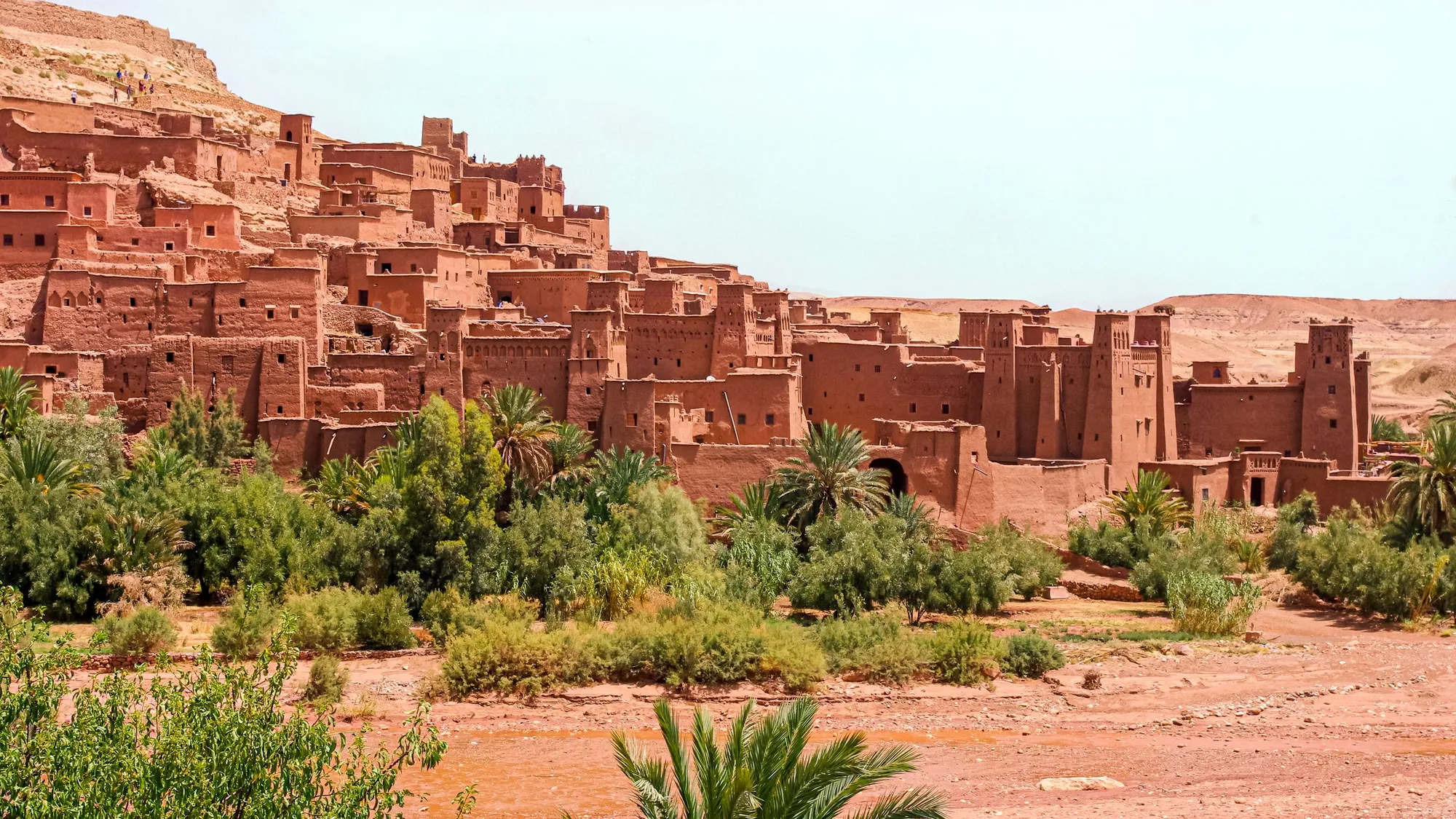
Late afternoon, when it can be arranged. The ksar, listed by UNESCO since 1987, lies about thirty minutes from Ouarzazate, and its earthen walls turn copper as the sun goes down. The group crosses the river on a footbridge, then climbs through the alleys to the old granary at the top, about twenty minutes of steady steps, for the view over the valley. Allow an hour and a half on site, with a licensed guide who can explain how the ksar was built and why most families moved to the new village opposite.
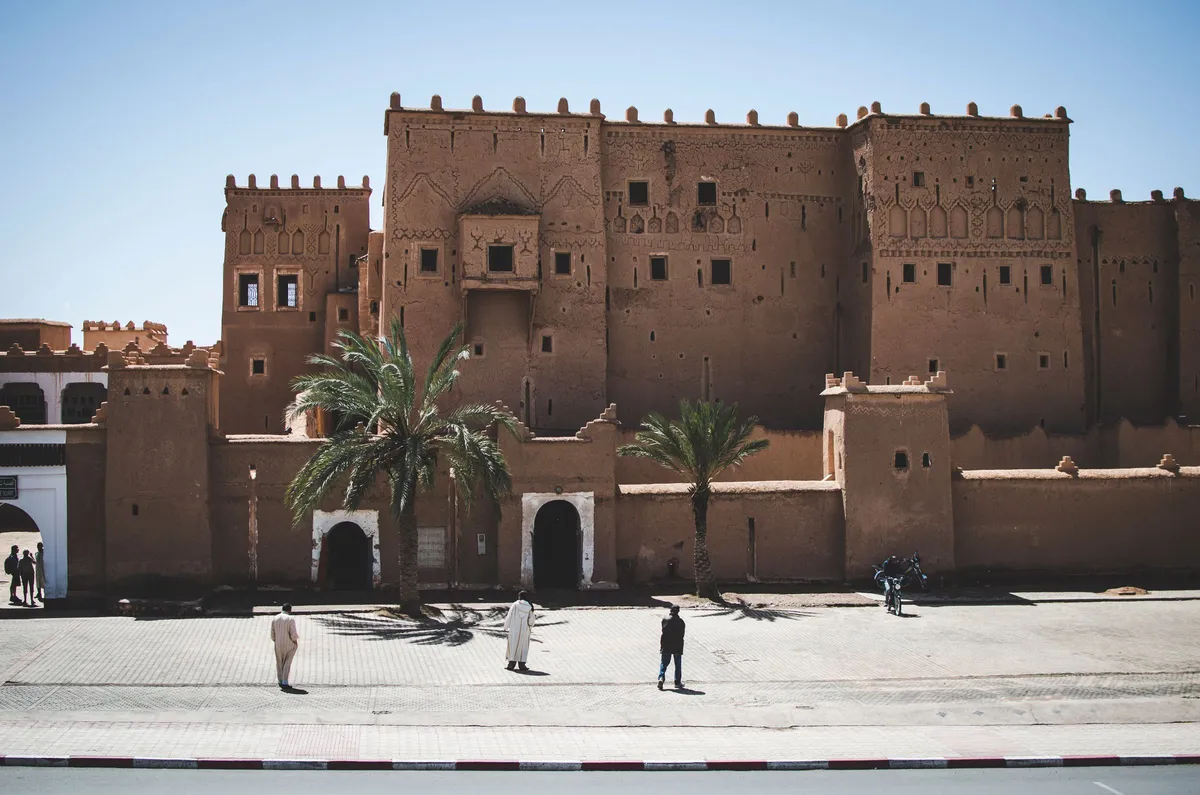
On screen, the ksar has played a dozen imaginary cities. In real life, it needs no script.
Sleep in Ouarzazate or beside the ksar?
It depends on the size of the group. Around Ait Benhaddou, small kasbah hotels let a group see the ksar at sunset and again in the empty morning, an experience that suits groups of up to about twenty people. A coach group of forty usually sleeps in Ouarzazate, where room capacity and parking are easier, and returns to the ksar the next day if the programme allows. Our hotels and riads page covers that choice between charm and capacity.
Which visits justify a second night?
A second night turns the stop into a stage. The Fint oasis, reached by a track about fifteen kilometres from town, hides a green palm grove under black rocks. The Skoura palm grove, to the east, is dotted with kasbahs and makes a gentle start on the road to the Dades. Combined with a studio visit, these give a full day without long drives, before the group continues towards the dunes described in Taking a group into the Sahara. For complete routes through the south, see Morocco itinerary for a group or ask a DMC in Morocco for a programme built around these two nights.