
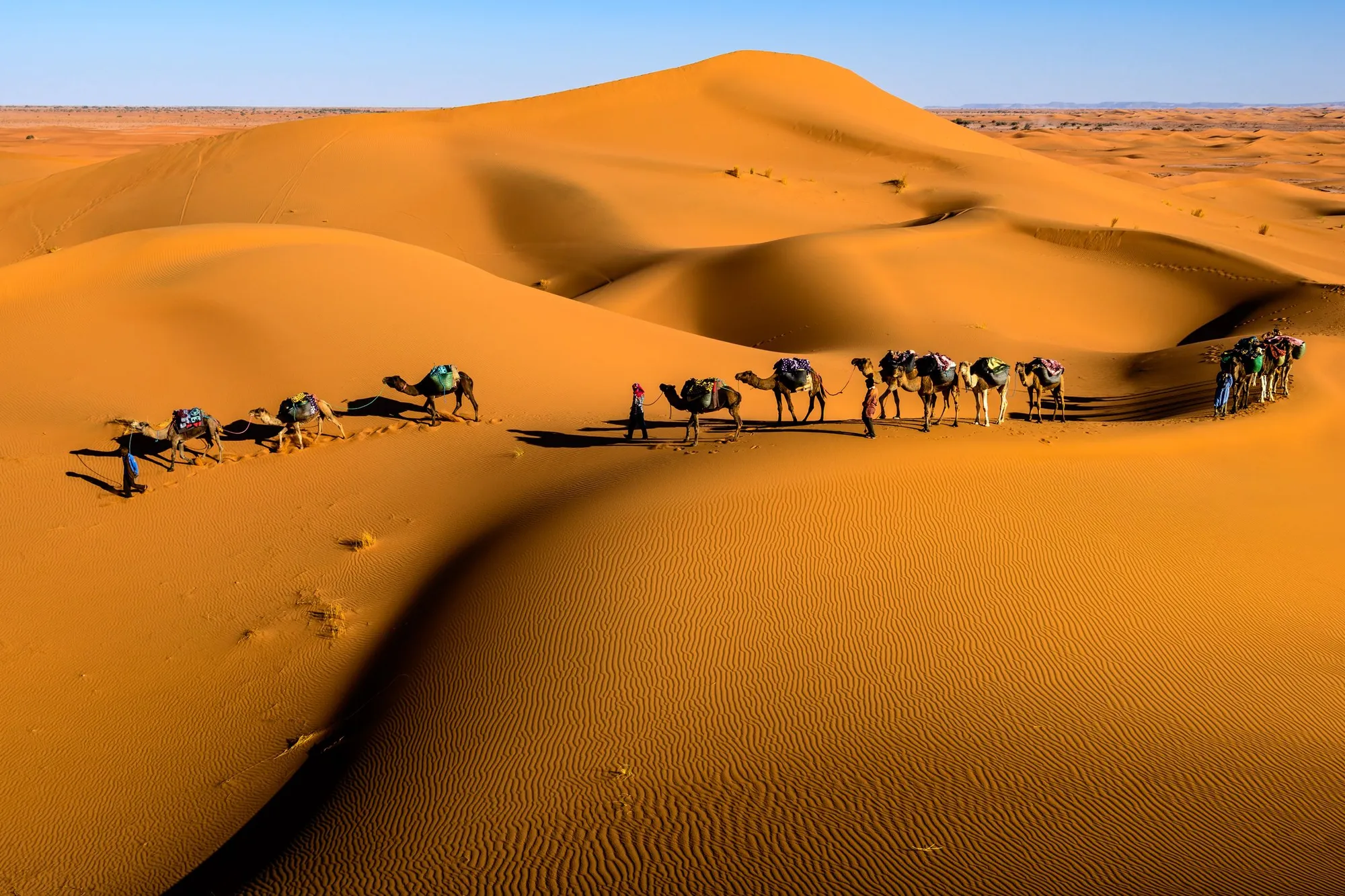
Most groups meet the Sahara for one evening: a drive, a camel ride at sunset, a night in a camp. A desert trek is another journey altogether. For four to six days, the group walks through dunes, stony plains and dry riverbeds while a caravan of dromedaries carries the bags, the water and the kitchen. The silence of the second day, when the vehicles are far behind, is what walkers remember most.
Where does a walking trip in the desert start?
The classic start is M'Hamid el Ghizlane, the last village at the end of the Draa valley road, south of Zagora. From there, the routes head west towards Erg Chigaga, a vast and remote sea of dunes with no road to its heart, crossing small oases and acacia plains on the way. Erg Chebbi, near Merzouga, suits shorter treks of two or three days around the dunes, with an easier access for groups arriving from Fes or the gorges. The fixed camps and the transfers into the dunes are covered in Taking a group into the Sahara.
How is a walking day organised?
The group sets off soon after sunrise, when the sand is cool and firm, and walks for three hours. In the middle of the day, the team stops in the shade of a tamarisk or an acacia for a long lunch and a rest while the heat passes. The walk resumes in the late afternoon, for two more hours, until the evening camp. In total, four to six hours of walking, on terrain that changes every hour: soft sand on the dunes, hard ground on the plains. Walking in sand tires the legs more than the distance suggests, so the daily stages stay modest.
Who travels with the group?
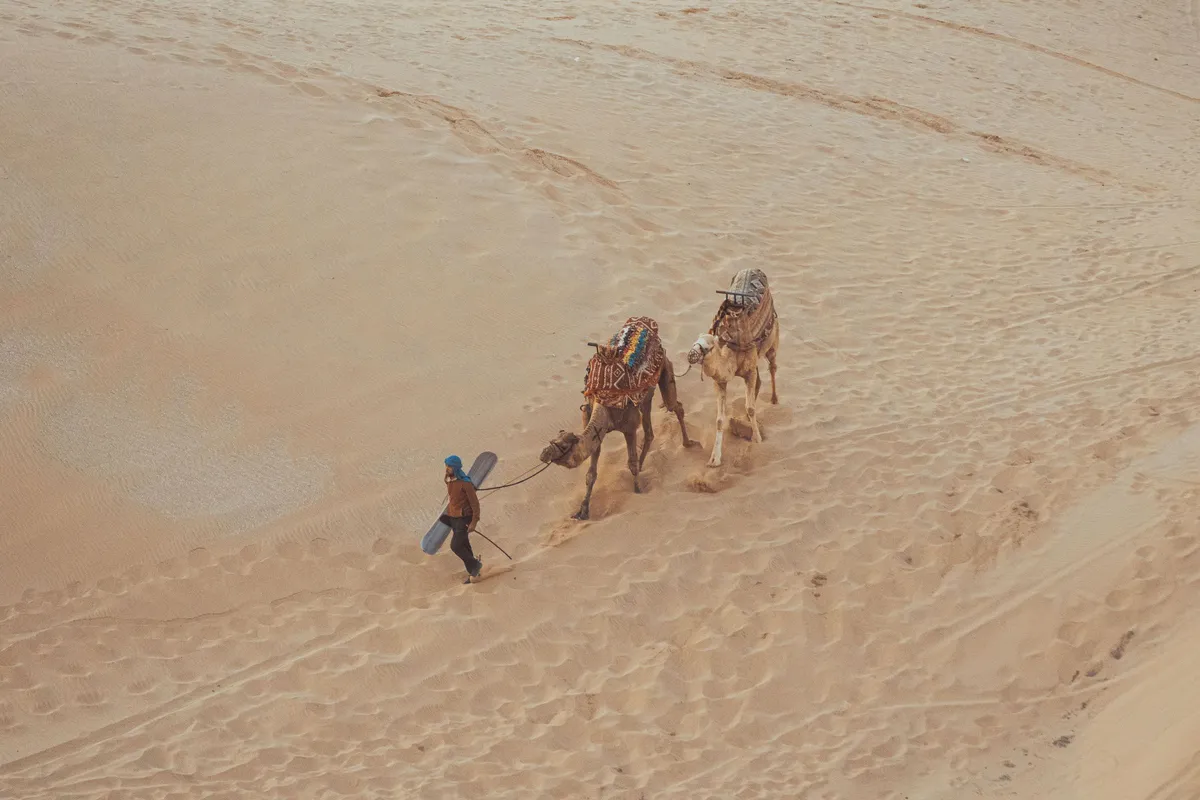
A desert guide leads the walk, the camel drivers handle the animals and the loads, and a cook prepares meals that surprise every group: fresh bread baked in the sand, tagines, mint tea at each stop. Walkers who feel tired can ride a dromedary for a stretch. Drinking water is carried for the whole crossing, and a vehicle can follow on the tracks nearby when the route allows it, for safety and for luggage that does not fit the caravan.
On the third morning, nobody looks at their phone any more: there is nothing to check but the shape of the next dune.
When is it possible, and for how many walkers?
From October to April. Days are mild in winter, but nights at the bivouac can fall close to freezing, so warm sleeping bags are part of the equipment list. From May to September, the heat rules out walking. One caravan comfortably serves a group of about fifteen to twenty walkers; larger groups are split into two caravans that walk apart and meet at the evening camp. A DMC in Morocco can place a short desert walk inside a wider circuit, or build the whole trip around the crossing.