
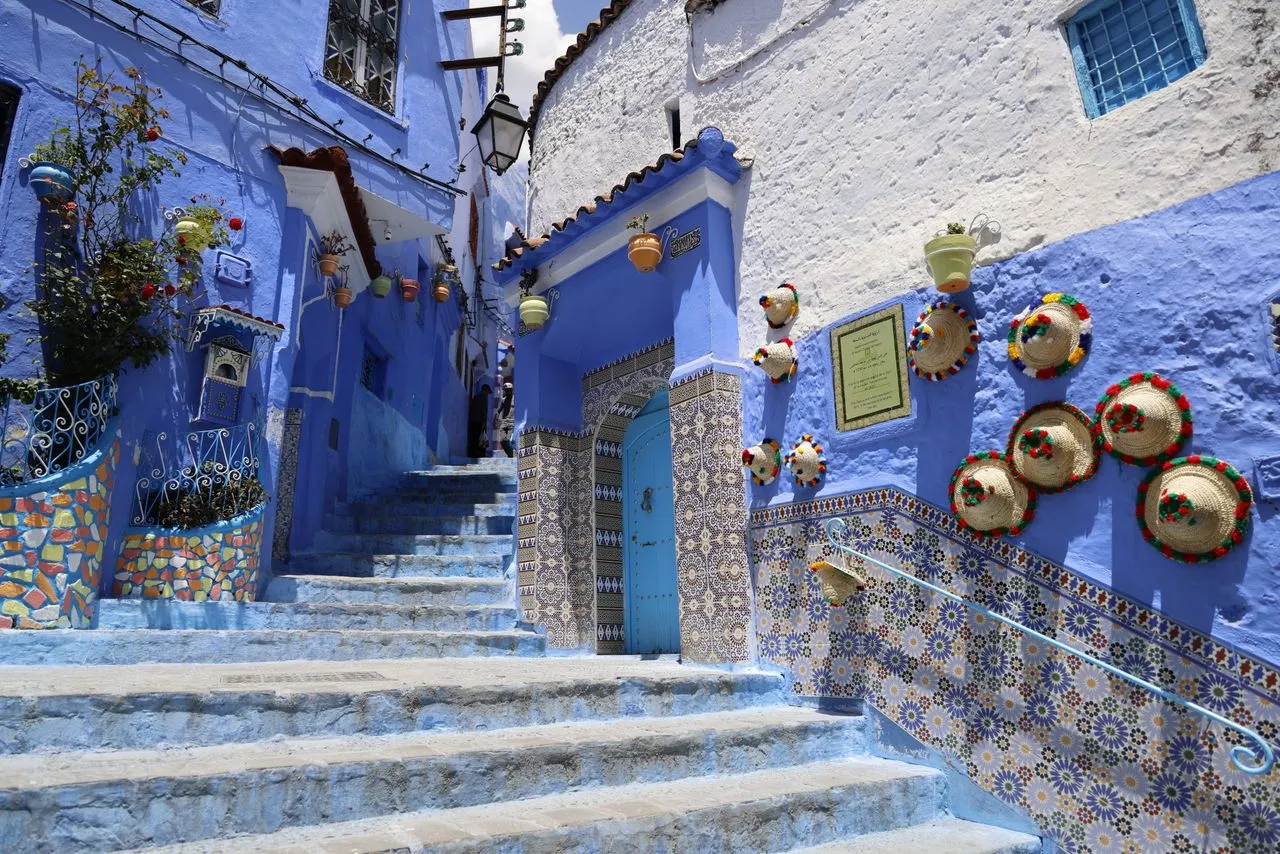
Founded in 1471 at the foot of the Rif mountains, Chefchaouen has become one of the most famous images of Morocco: a medina painted blue, clinging to the slope. Its modest size and steep terrain make it a stop apart on a circuit, planned differently from a large imperial city.
How does a group reach Chefchaouen?
The town is about two hours by road from Tangier, a little over an hour from Tetouan and about four hours from Fes, on mountain roads. The coach drops the group at the edge of the medina, near Bab el Ain. The real question is luggage: no vehicle climbs the lanes, so plan porters or a small vehicle to the closest point to each property.
A day trip or a night there?
A return trip from Fes means a long day on the road for a few hours of visiting. On a northern circuit, Chefchaouen fits naturally between Tangier or Tetouan and Fes, with one night in town. The group then sees the town in the evening and early in the morning, when the lanes are quiet and the light is at its best for photos.
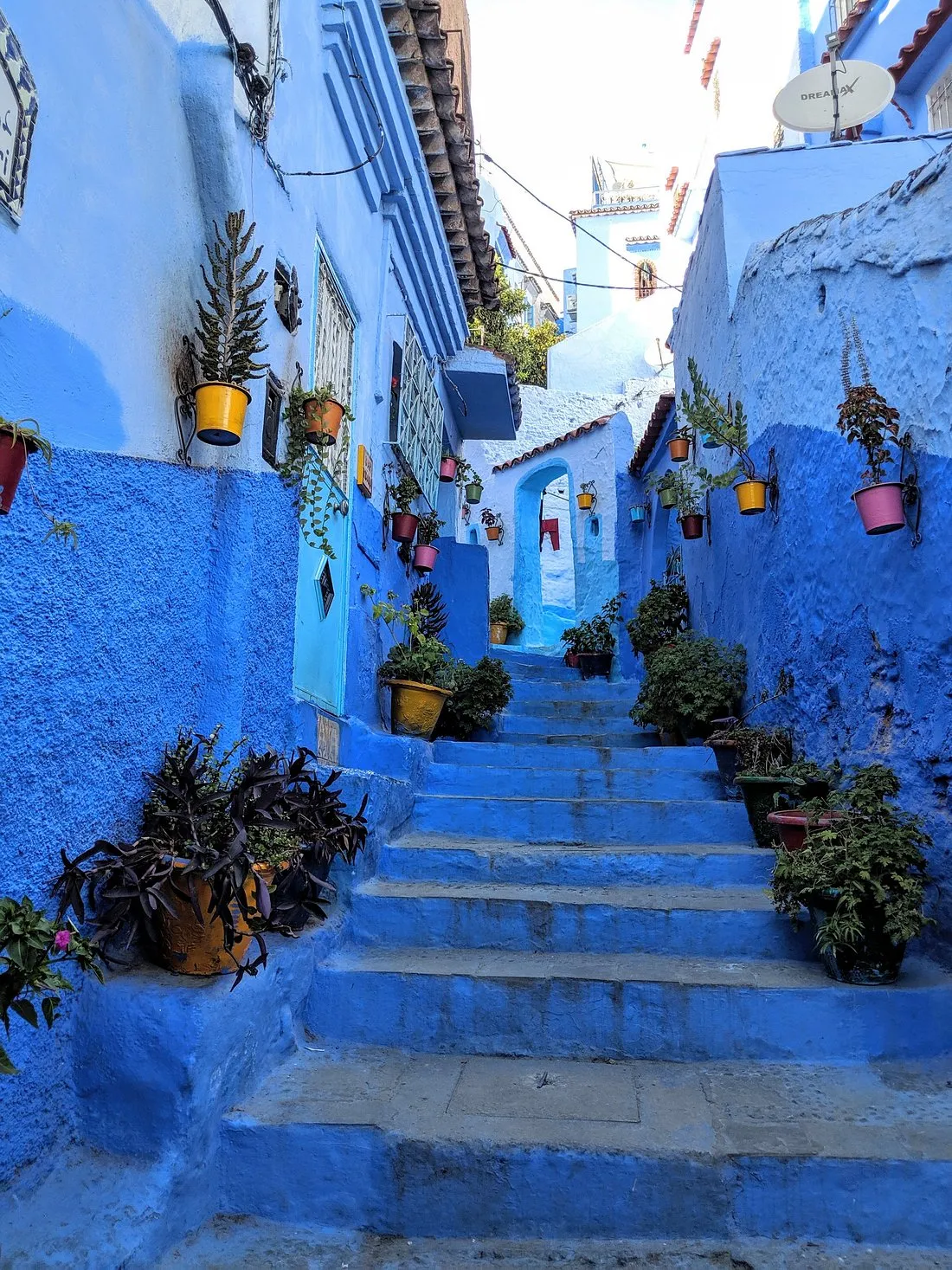
What is there to see in the medina?
The medina is built on a slope: you are always walking up or down steps. Tell participants before departure, and plan an adapted route around the squares for travellers with reduced mobility. The main stops:
- Outa el Hammam square, the heart of the medina, with the kasbah and its garden, and the Grand Mosque with its octagonal minaret.
- Ras el Ma, the spring at the edge of the medina, with its traditional washing places.
- The Spanish Mosque, on the hill opposite, for the view over the whole town at sunset. The walk up takes about thirty minutes.
- The craft shops: weaving, basketry, woodwork.
Where do you house a group in Chefchaouen?
The medina is mostly guesthouses and riads with a handful of rooms. A large group is therefore split across several neighbouring houses, or housed in a larger hotel on the edge of the medina, with rooms booked early in spring and autumn. We cover this question in detail in Riads for groups: how many rooms is too many?
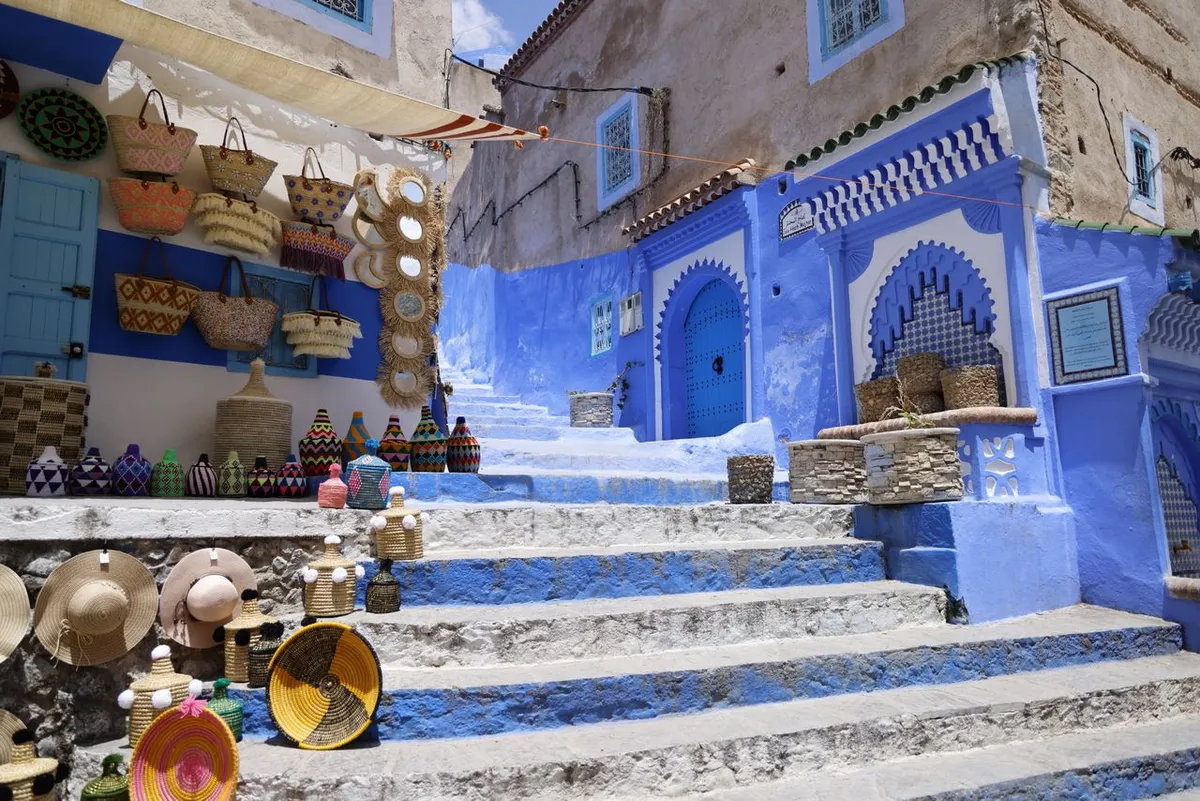
Photographing the blue city: what courtesy rules apply?
The most photographed lanes are also places where people live. The doors and stairs often belong to inhabited homes: avoid blocking the way, keep voices low and always ask before photographing a person. A reminder from the guide before the visit is usually enough to avoid any awkward moment.
Here, people live behind the doors everyone photographs. Respecting the neighbourhood is part of the visit.